
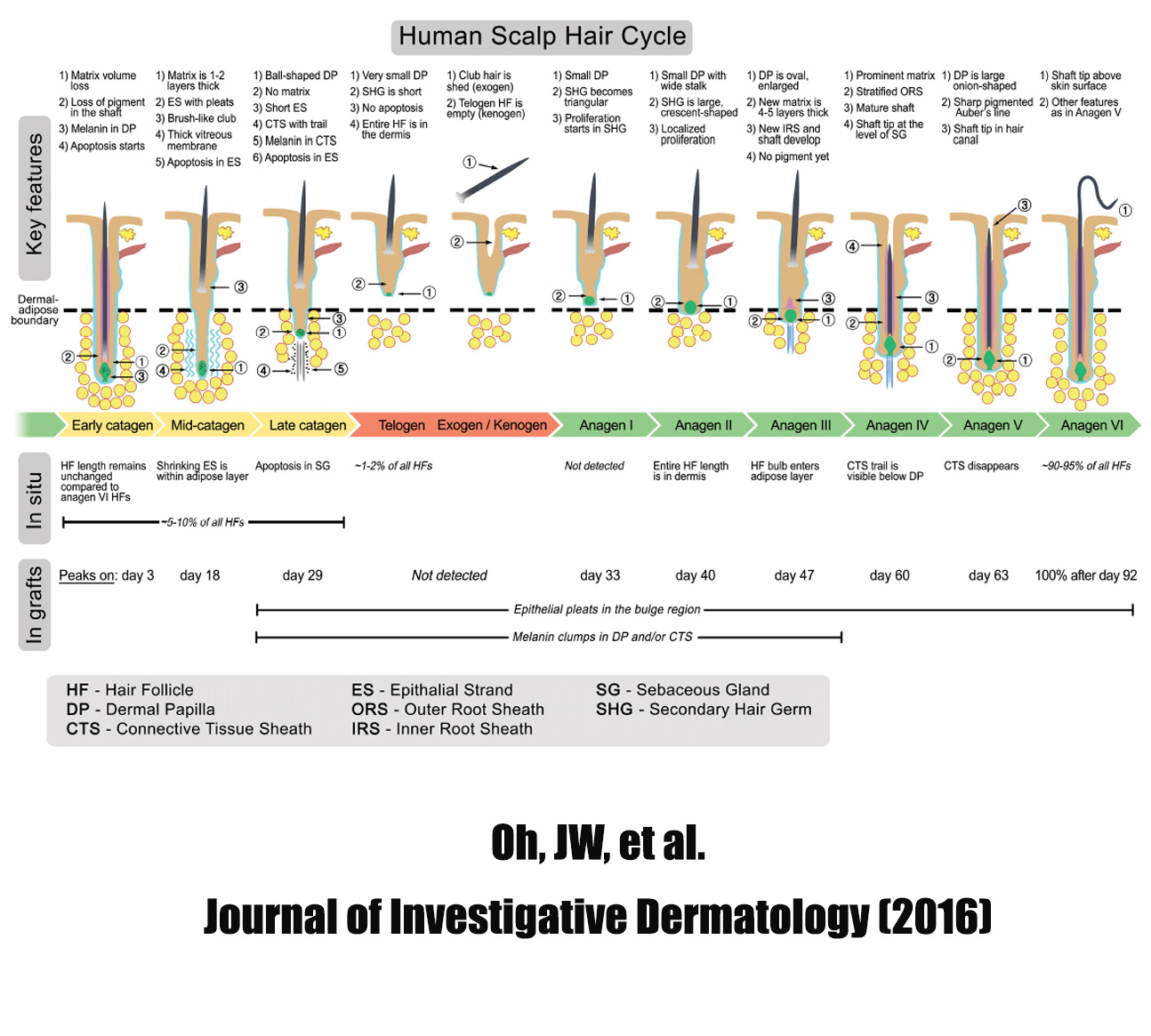
Stem cell biology
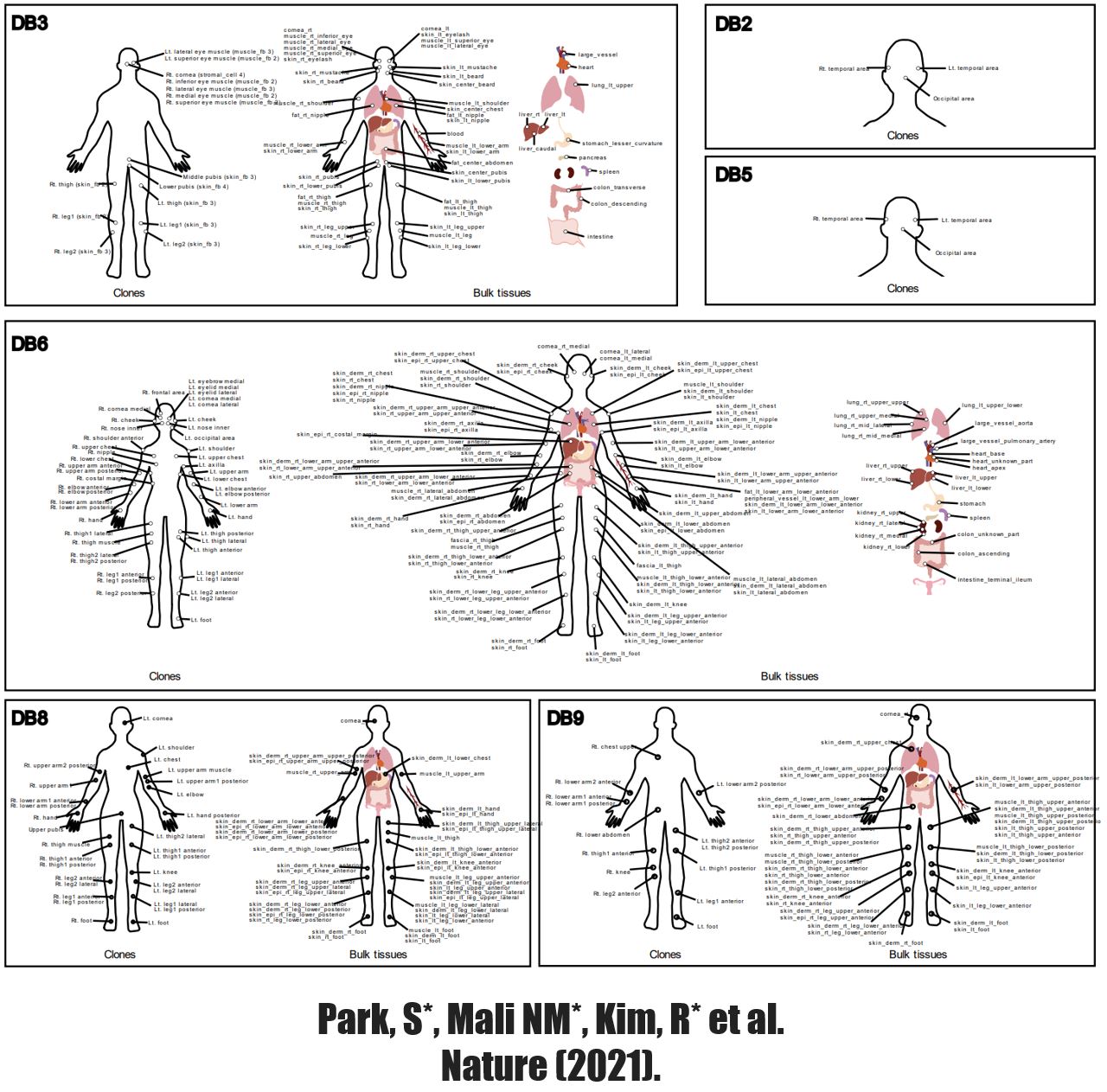
Development and Regeneration
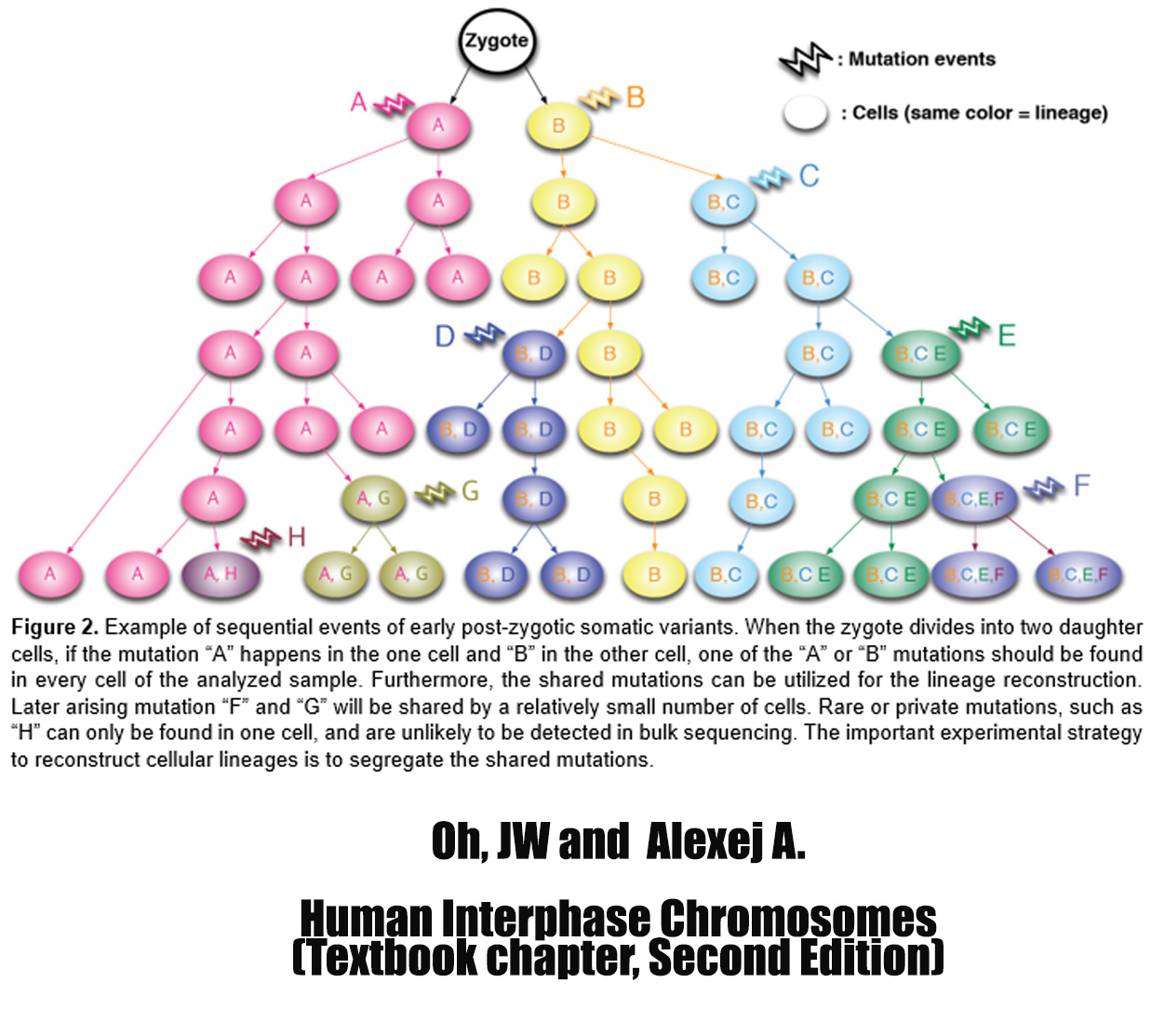
Somatic Variants

Lineage Tracing based on Heterogeneity
Stem cell biology: Stem cell behaviors, Stochastic stem cell fates.
Development and Regeneration: Developmental biology, Cyclic organ regeneration.
Somatic Variants: Post-mortem genetics, Post-zygotic variants.
Human Cellular Lineage by Mosaicism
Somatic mutations arise ubiquitously during DNA replication and exogenous/endogenous mutagenic exposures.These mutations are clonally inherited, generating phylogenetically structured cellular mosaics across the human body.Thus, they serve as endogenous barcodes that encode the developmental trajectories, regenerative kinetics, and pathological evolution of human tissues.
G1 Lab leverages post-mortem human tissues to obtain organ-scale sampling inaccessible in living individuals.Integrating ultra-deep WGS, single-cell multi-omics, spatial profiling, and mathematical lineage reconstruction, we aim to establish causal links between lineage architecture, mutation processes, tissue-specific stem-cell dynamics, and clinical outcomes across the human lifespan.
Our contributions have defined the current landscape of human somatic lineage research that established quantitative lineage recording in human development and across multiple adult tissues.
Our research platform enables extensive multidimensional expansion across human biology, yet we strategically focus on three fundamental biological questions that govern cellular lineage evolution throughout the human lifespan.
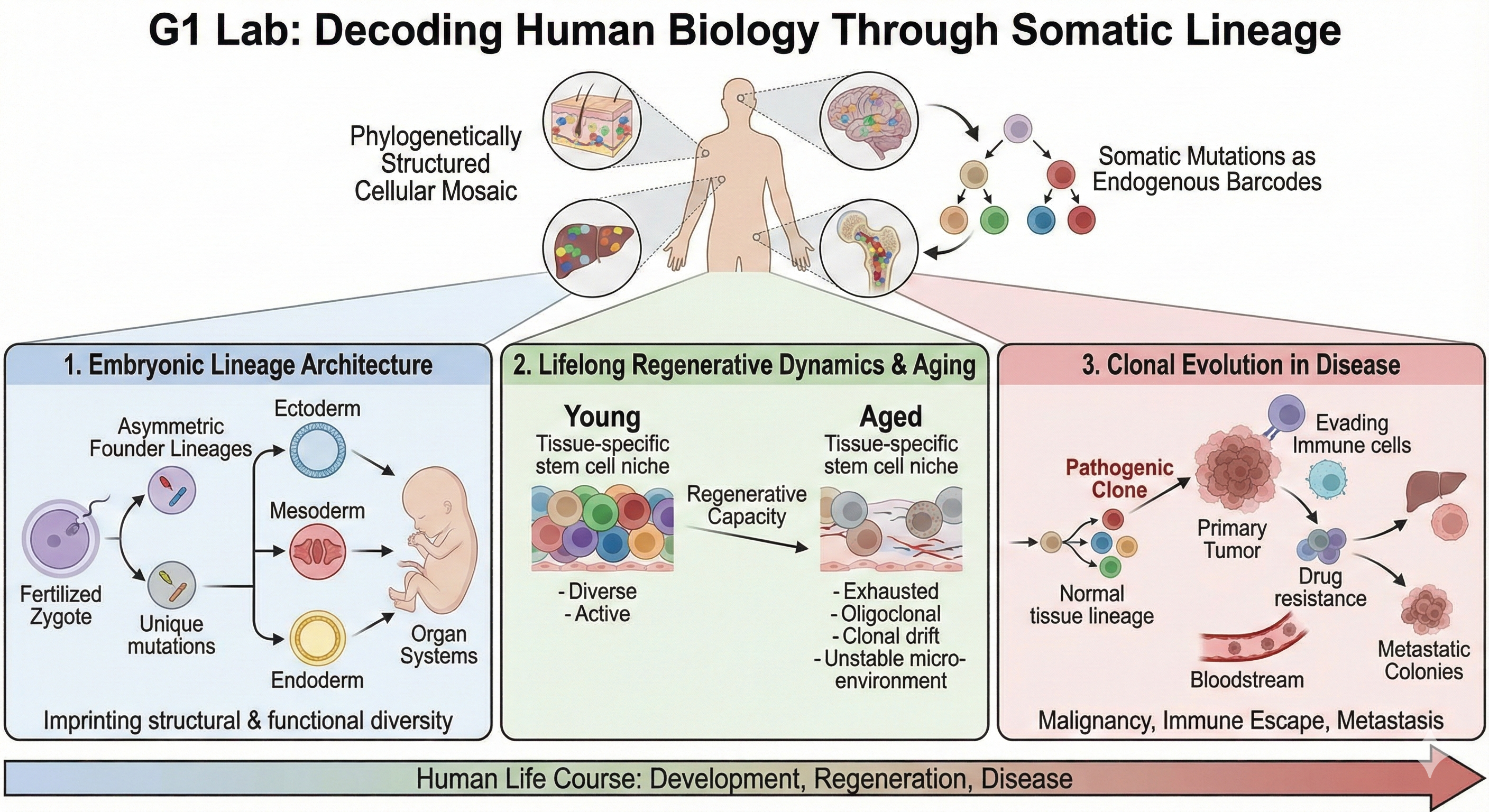
1️⃣ Molecular and Topological Principles of Human Embryonic Lineage Architecture
We investigate how the earliest embryonic cell divisions generate asymmetric founder lineages, imprinting structural and functional diversity across adult organ systems.
By employing somatic mutations as endogenous lineage recorders, we reconstruct organ–specific clonal hierarchies and quantify developmental biases that predispose tissues to future vulnerability or resilience.
Focus Areas
1) Quantitative modeling of zygotic lineage bifurcation and bottlenecks.
2) Germ-layer/organ-level lineage allocation and morphogenetic coordination.
3) Early mutational processes as determinants of inter-individual variation.
2️⃣ Lifelong Regenerative Dynamics and Age-associated Lineage Remodeling
Human homeostasis relies on tissue-specific stem-cell compartments with distinct turnover strategies.Through post-mortem, whole-organ multi-omics and spatially resolved lineage inference, we define the kinetics of clonal drift, exhaustion, and micro-environment-driven instability that accompany biological aging.
Focus Areas
1) Organ-scale lineage turnover and selection coefficients.
2) Age-dependent structural constraints and regenerative decline.
3) Integration of spatial transcriptomics and epigenomics with clonal topology.
3️⃣ Clonal Evolution Underlying Disease Initiation and Metastatic Dissemination
Malignancy and tissue dysfunction emerge when regulatory lineage architecture deteriorates.We map the divergence of pathogenic clones from their normal counterparts, elucidating ecological transitions that enable immune escape, therapeutic resistance, and multi-organ metastasis.
Focus Areas
1) Primary-metastatic founder tracing and phylogeographic mapping.
2) Micro-environmental determinants of dormancy versus expansion.
3) Predictive modeling of lineage instability and treatment response.
By decoding human biology through the structural logic of somatic lineage of human, we aim to establish the foundational principles linking development, regeneration, and disease across the human life course.
🧬 Cutting-edge Technologies & Technical Expertise
We actively adopt the latest cutting-edge technologies across genomics, multi-omics, and computational biology, yet we possess deep expertise and operational mastery in the specific methodologies below, enabling us to tackle complex biological questions that are technically inaccessible to most laboratories.

1️⃣ High-fidelity Genome Profiling of Post-mortem Tissues
Ultra-deep WGS with optimized low-VAF variant calling pipelines for somatic lineage inference.
Duplex and long-read sequencing to resolve structural mutations and clonal architecture with high precision.
2️⃣ Whole-organ Spatial and Single-cell Multi-omics Integration
Spatial transcriptomics and epigenomics aligned with morphologically preserved tissue microenvironments.
Single-cell genome and transcriptome linkage for mutation-informed cellular phenotyping.
3️⃣ Somatic Lineage Tree Reconstruction and Mathematical Modeling
Phylogenetic modeling that connects developmental topology with regenerative kinetics and selective pressures.
AI-assisted clonal dynamic simulations to identify lineage-level determinants of aging and disease.
We continually refine and scale these technologies to establish the reference framework of human cellular lineage evolution, positioning us at the forefront of global somatic mosaicism research.
Scientific subjects
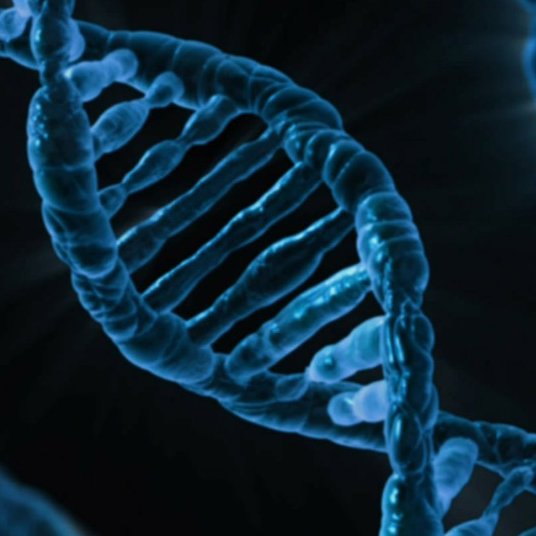
Lineage tracing in human, and animal (Genetics)
- Post-mortem individual genetics
- Post-zygotic variants
- Molecular evolution of cell and microbe
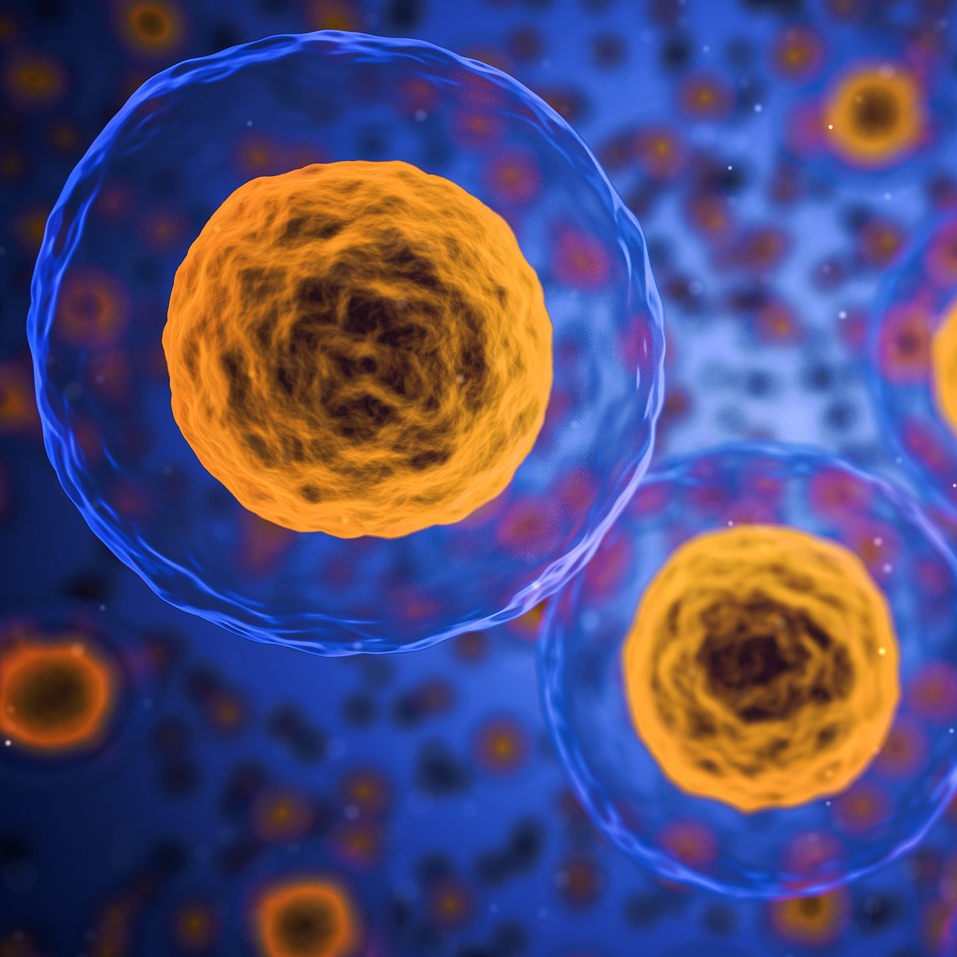
Stem cells behavior and commitment (Stem Cell Biology)
- Microenvironmental niches and cyclic behavior of hair follicles
- Muscle dynamics and aging

Germ cells and reproduction (Reproduction Biology)
- Spatio-temporan behaviors and commitment of the germ cells
- Sexual reproduction of germ cells
- Asexual reproduction of germ cells
- anmial and human meiotic recombination
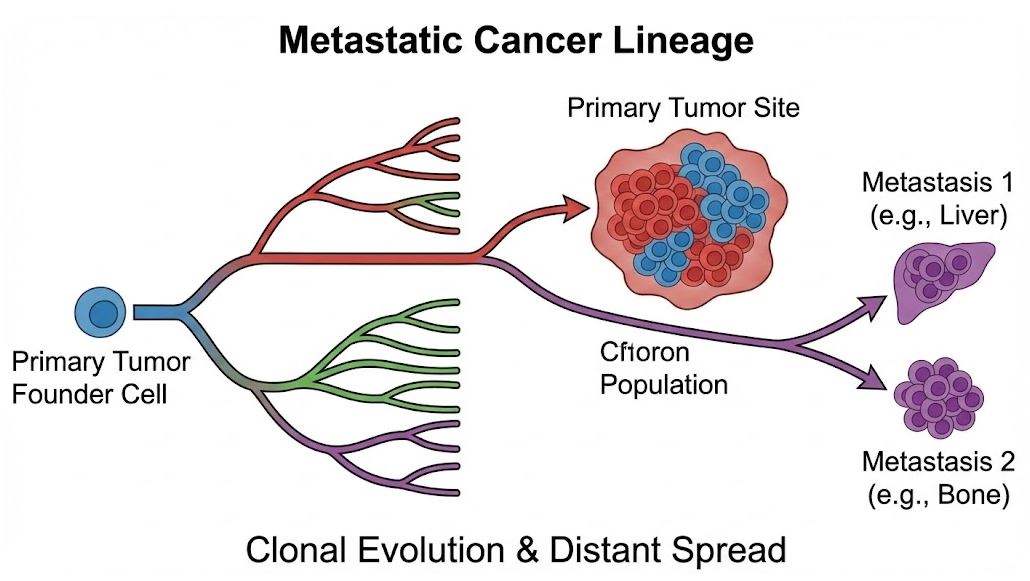
Clonal evolution features of the primary and metastatic cancers
- Normal to primary-metastatic founder tracing
- Lineage commitment from primary cancer to metastatic dissemination
- Predictive modeling and mechanism of lineage instability and treatment response
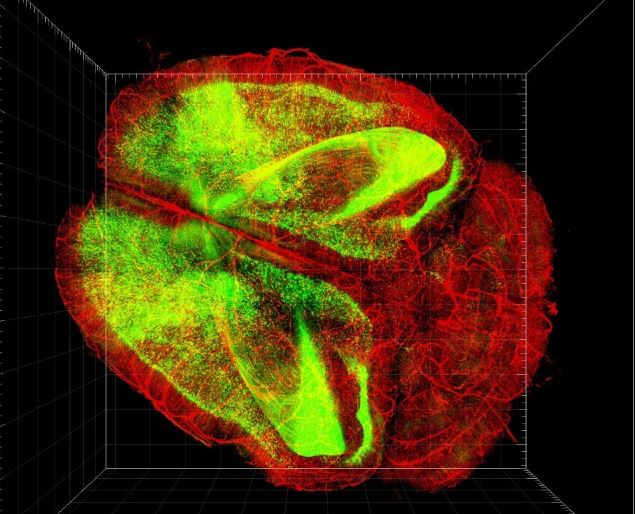
Spatio-temporal features of the organs (Anatomy, Development and Histology)
- 3D spatio-temporal dynamics of embryo
- 3D morphological features of the organs
- Gross anatomy
Industrial and clinical subjects

Industrial subjects
- Recomninant protein, growth factors
- Recomninant protein, immunologic cytokines
- Recomninant protein, antibodies
- Therapeutic antibody platform
- Diagnostic antibody platform
- Mammalian cell protein expression platform
- 3D tissue clearing and visualization of the organ

Clinical subjects
- Human hair transplantation
- Human alopecia treatment
- Cell therapy